
Despair Born from Progress
A case of class struggle in the age of AI

I publish twice a month. On the first Saturday of every month, readers can expect a “mainline,” often multi-part essay clarifying, applying, or adding onto Marxist theory. Two weeks later, a “sideline” essay analyzing a major current event or viral point of discourse is published using the frameworks laid out in the theoretical pieces. Every essay is free for one month after publication, after which it is automatically paywalled (with exceptions).
For access to the entire archive, please consider a paid subscription.
The AI Bomb
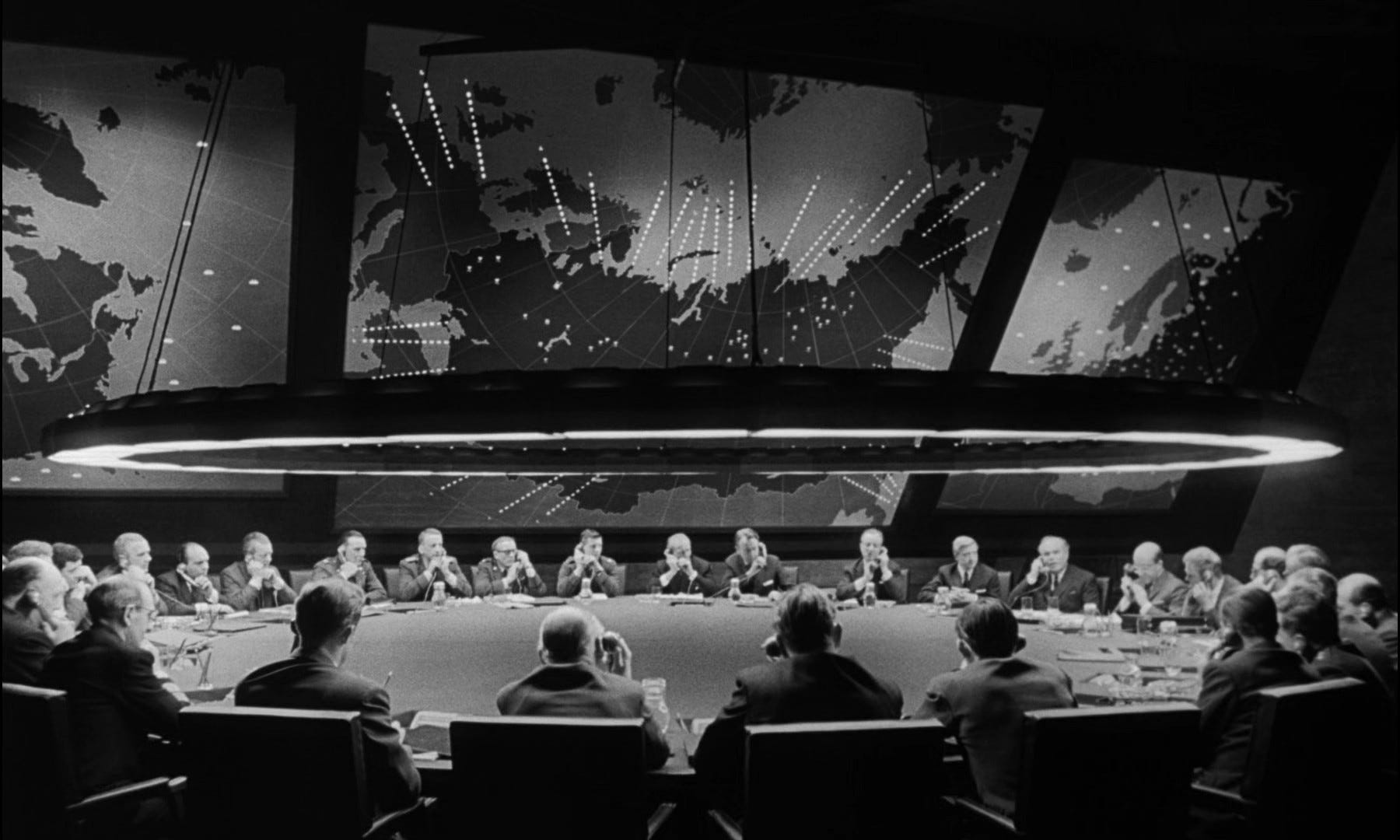
There is an air of profound pessimism surrounding LLMs and other forms of AI. From the economic side, perceptions of a catastrophic investment bubble. From the ecological side, concern over data center energy, land, and water use. From the educational and training side, observed loss of cognitive skills in students/interns. From the labor side, a sense of impending human obsolescence. From the consumer side, a feeling of inundation by all manner of scams and slop. From the security side, a rational paranoia over its surveillance and code-breaking capabilities. From the psychological side, growing worry over vulnerable people self-isolating and exhibiting “AI psychosis” in a variety of destructive ways. From the philosophical side, a sense that AI is increasingly automating creative, pleasurable, and necessary work while reducing human beings to robotic assistants. And, of course, from the less-grounded side, fears that AI will gain consciousness and take over the world for itself.
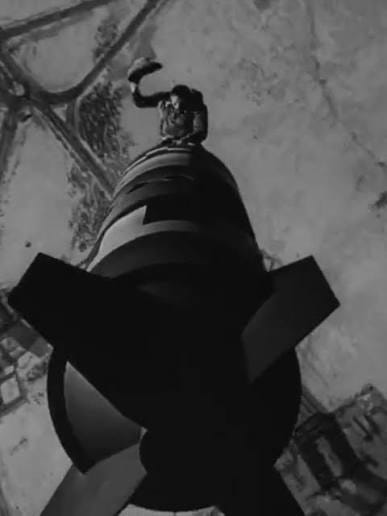
While virtually every example of transformative technological progress has had its detractors, rarely has it been the case in the modern era that the critical perspective was held by an overwhelming majority of society. Moreover, those who adopt the critical perspective are near-totalizing in their critiques. Many who hate AI believe it both cannot replace human labor because its outputs are too shoddy and that it will replace human labor regardless. In a similar vein, many believe its economics are unviable and will produce modest gains at best, yet at the same time, those same people have fears of the creation of a “permanent underclass” and a rapidly expanding wealth gap. Even those who use it regularly for personal and professional use have little positive to say about it, other than the use-cases they have found for their drudge work. The only technology which produced a similar level of societal dread was the H-bomb, and unlike the H-bomb, this one is already actively being deployed on billions of civilians. Much like the H-bomb, however, no level of mass organization will stop its development because to not have it risks being destroyed by those who do.
Kirwin Hampshire captures this prevailing sentiment quite well in his recent essay “The Dark Night of Mathematics.” He articulates his own dread with total clarity and self-awareness, which is why I feel comfortable using his articulation as my example. On Twitter, I had some choice words for Mr. Hampshire, referring to his laments as “weepy, suicidal bullshit.” This was unnecessarily insensitive of me. It’s obvious his metaphysical dread is genuine, and after pondering on it for some time, the automation of mathematics would produce more significant fatalism in its practitioners than in more subjective pursuits like literature and the visual arts which have been experiencing this reckoning since GPT-2 and DALL-E. While I retract the insult (long-time readers know how rare that is), I do not retract my initial bewilderment at this technology creating genuine suicidal despair in highly specialized fields.
Mr. Hampshire, if you’re reading this, I have some answers for both of us, though you may not like them.
Displaced Antagonism
Where there is a definite objectivity in mathematics, there is no such thing in the arts. A novel which is perfect and precise in its deployment of the English language might be a bunch of boring bullshit with no room for interpretation or sentiment, and have nothing interesting to say. Meanwhile, a nearly illegible text that has violated all of the conventional rules of English (or even cognition) might be regarded as a brilliant, prescient masterpiece. Either example might be maligned at publication and celebrated a century later, or vice versa, because part of what makes a written work “great” is society’s willingness to embrace it as a point of reference. Literary technique is objective, influence on later works is objective even when unconscious, but taste is in the eye of the beholder. LLMs have writing styles all their own, and while in theory an LLM can be created which can mimic all manner of literary styles while writing compelling stories, this does not “solve” the field of literature. The same is true of music, and of the visual arts; no matter how competent an AI model might become at these endeavors, it will only ever be at best a tool for other artists in the same field. While mathematicians also rely on taste to prove themselves in their field, it isn’t what proves their work correct. There is an objectivity to mathematics which exists outside the social tide, and the fact that it is a discipline which can be “solved” by technology does create a more permanent sense of foreclosure.
A similar crisis occurred in the chess world decades ago. The crisis began when machines like DeepBlue publicly and consistently defeated the best chess players in the world. Many analyses from the time claimed that this would be the end of chess as a status signal and as a professional sport in its own right. Yet despite the fact that every smartphone now has access to models which stump even the likes of Magnus Carlsen and Hikaru Nakamura, the game is healthier than it’s ever been. Tournament participation is way up, as is social media interest (streamers like GothamChess are incredibly popular), online gaming, the betting ecosystem, the subculture1 and so on and so forth.
Chess, like mathematics, is largely objective. There are objectively correct moves and objectively incorrect moves, much like there are objectively correct and incorrect proofs. Like math, much of the pleasure people derive from the game is not in arriving at the correct answer, but in working out the problem in an elegant way. Players are often told they have a “style,” an objective pattern of behavior that can make them predictable and menacing simultaneously. Similarly, different mathematicians have their own “style” in writing proofs, some more eloquent than others.
So, if they are so similar, why did chess’s most vocal proponents not fall into maddening despair over the AI-pocalypse of their beloved game? Why, if human beings are practically redundant to solving it, is there a healthier competitive and amateur scene than ever before? And why can’t frontier mathematicians do the same for their beloved science, which is phenomenally more complicated and more useful to the world than an ancient board game?
The gap between elite chess players and the novices who spectate is not as significant as the gap between a doctor writing proofs for category theory and an undergraduate finance student who enjoys watching 3blue1brown. In chess, novices can follow what elite players are doing even if they could not come up with the same tactics themselves under pressure, similar to how a high school student who couldn’t make the JV basketball team still enjoys watching the NBA. Novices in the world of mathematics cannot fully understand what the cutting edge of that world is saying, or doing, much less apply it to their own lives or to other fields. While the Olympiad exists as math’s competitive analog, and the YouTuber ecosystem exists as an introduction into math subcultures and memes, there still remains an enormous gulf between the spectator and the participant, owing to the highly specialized training that it takes to create a frontier mathematician.
So, advanced original mathematical contributions will almost certainly never become a casual spectator sport. Their value in the market economy2 comes from their usability as research and development for other scientific and engineering fields. This, as Hampshire points out, is why universities and corporations bother to keep the lights on. If those same research outputs can be automated, then institutional funding will move away from paying human beings to building data centers. There is no recourse for elite mathematicians to save their labor of love in the same way elite chess players were able to save the sport. These lengthy and expensive training pipelines will contract, and what little commercial ecosystem exists to cultivate the best of the best will die with it, just like the boomtowns that never got their railroad station. Those that could have become mathematicians will become technicians and interpreters of AI outputs instead.
Hampshire is well aware of this, and makes his own comparisons.
What if the library of Babel was being constructed before our eyes and there was some mechanism for separating the masterpieces from the random strings of text, and all the masterpieces were dropping as fast as publishers could scoop them up? Would authors stop writing then? What about if the very second someone began composing a story in their private word processor, the demonic Master Librarian read their mind and completed their story in one million ways, then used some oracle to pluck the best for publishing. What then? The answer is probably the same no matter how bad I make it. The author still writes. But why the hell would we do this? Why would we force the author to endure this nightmare?
What about this: What if we told the author that they would never write again. They are forbidden from creating original works to express themselves. However, they are still permitted to comment on writing, interpret it, share their taste. They are still valued for their appraisal, presentation, understanding and appreciation of creative writing. They just can’t write creatively anymore. They can go on as an enthusiastic spectator. Do you think they’d snap?
While I feel for the man, his antagonism is displaced. He is mad at the machine, occasionally at the companies building the machine, for destroying his ability to become a professional mathematical aristocrat.3 His metaphysical despair is real, but I want to call attention to this earlier passage:
Of course, under our system, no one is going to pay for this. Mathematicians are paid to prove theorems. Mathematicians are, indeed, also paid to teach, peer-review, go to conferences and learn mathematics, but all of that better result in some damn good theorems. This isn’t looking good. Well, perhaps they will still pay a couple of the old guard to keep the lights on at the LLM theorem factory. But for embryonic mathematicians like I, the outcome is unchanged. Oh well, maybe I’ll find some time for math in the evenings.
Is this a good cope? Are you feeling ok now? Me neither. All of this is evasive. Everything said thus far still sidesteps the emotional core of the issue. Here it is:
There is something about mathematical discovery (progress, advancement, creation) which is vital to the spiritual, experiential quality of doing mathematics. The creation (or even the pursuit) of novel mathematics is one way that humans have historically accessed the ineffable and encountered the divine and mystical.
That admission may come as a surprise to some non-mathematicians. But I would be willing to bet that for any mathematician reading this, what I have said above is quite prosaic—whether or not it accords with their personal experience of mathematics. Here is a brief gesture at the full sweep of mathematical mystics and dreamers: Ramanujan, Grothendieck, Cantor, Pascal, Luzin, Leibniz and possibly you, or someone you know.
Other aspects of practicing math (such as learning long-established theory) can also afford encounters with the sublime. However, I believe that’s because we are walking a path of rediscovery on which another human has tread. For me, the affective quality of learning mathematics is empathetically tethered to an act of discovery and creation. It is social. We are conversant with another mathematician—perhaps long dead. If we follow the chain of communication we arrive at a mathematician who enjoyed some original discovery. Human mathematics is Talmudic. It is a lively discourse of philosophical and religious richness spanning thousands of years.
He claims that the destruction of the material base undergirding the institution is an evasion away from the “emotional core” and that his real concern has to do with the coming absence of divine communion in his life. But this is my contention: Focusing on the emotional core is an evasion from the material reality. The destruction of that base is what produces this profound despair, and it is why despite the progress LLMs have made, mathematicians like Hampshire see it as a bomb going off in slow motion.
The only option they have is to focus on the material aspect, and to do so from the perspective of the whole political economy. This would require organization on the part of mathematicians as a subject class, and a far greater interest in analyzing the general state of society. They must seek to answer: Why and how is this particular form of labor being devalued so rapidly, and to what end? Viewing this grief as an individual condition is a surefire way to be replaced even sooner. Rust Belt laborers had unions, participated in strikes, penned analyses of their conditions, voted for politicians who said the right things, and made demands of their employers, and for all that effort, they still lost their jobs and became the faces of Midwestern blight and the opioid crisis.
And yet, the concerns of labor remain central to the general social system. Deindustrialization demanded an explanation. New coalitions were formed courting each of the explanations supplied. The nature of trade agreements had to be renegotiated, conflicts which by necessity extended into monetary and mutual defense agreements. Protectionism came back to the table, albeit in mutated form. The composition of a major voting bloc changed dramatically, and the ideological core of each party was obliterated and is still in the process of being replaced. Still, no one is actually addressing the concerns of labor as a class unto itself (including those in America’s largest socialist faction), but managing those antagonisms such that there is no all-out class war is a key concern of those tasked with stewarding global capital, domestically and abroad. The potential for such a struggle still exists, and will always exist so long as those antagonisms do. As the culture war over AI has thus far shown, those antagonisms will only continue to deepen as people are simultaneously ripped from their labors of love and their means of subsistence.
While labor has obviously lost the battle for the last thirty-some odd years, it is not as though sitting with their feelings would have done anything for them. They fought and they lost, and have lost the capacity to fight with the same ferocity as they once did. That does not mean that fighting is worthless; it’s literally the only thing one can do when faced with social forces seeking to obliterate them. Of course, the fact that this crisis in mathematics immediately led to public nihilism rather than any call for organization makes sense—no one outside the field would really pay attention if only mathematicians got together to organize a strike, and what would that even look like? While only a select few in the world are capable of doing this work, the same is true for other fields facing the same crisis, some of which control more prescient structural chokepoints than mathematical journals.
What I suggest, Mr. Hampshire (if you are reading), is to process your grief as fully as you can so that you may move past it as a stronger man, and help to create a coalition which cannot be ignored. Your field is not the only one at risk; there is an entire technical stratum in danger of being demoted to correcting LLM hallucinations. Were they all to dissolve into prioritizing their private grief, they would leave no residue on the world which comes out of this AI realignment. Such a coalition may still fail; it probably will, but it may also win concessions before its liquidation. To struggle and fail is still better than to concede before you can land a single blow.
Godspeed.
Pawn Chess Club in New York City is an example of how successful the chess scene has become since the pandemic. The club is a weekly pop-up that started in small bars in 2023, and has recently partnered with the Guggenheim. Despite having no physical location, occurring on weeknights, and only announcing events a week or so in advance, it is very well-attended and has been growing for years.
Which is a distortion of the other use-values they have, and of the value of performing the cognitive labor itself.
To Mr. Hampshire, if you do end up reading this, I don’t use the word “aristocrat” disparagingly in any of my essays; to me it is a neutral-to-positive term. I imagine that you’d prefer to be one of the aristocrats in the field because occupying that position would free you from having to do something passionless for subsistence, not because it confers social status.